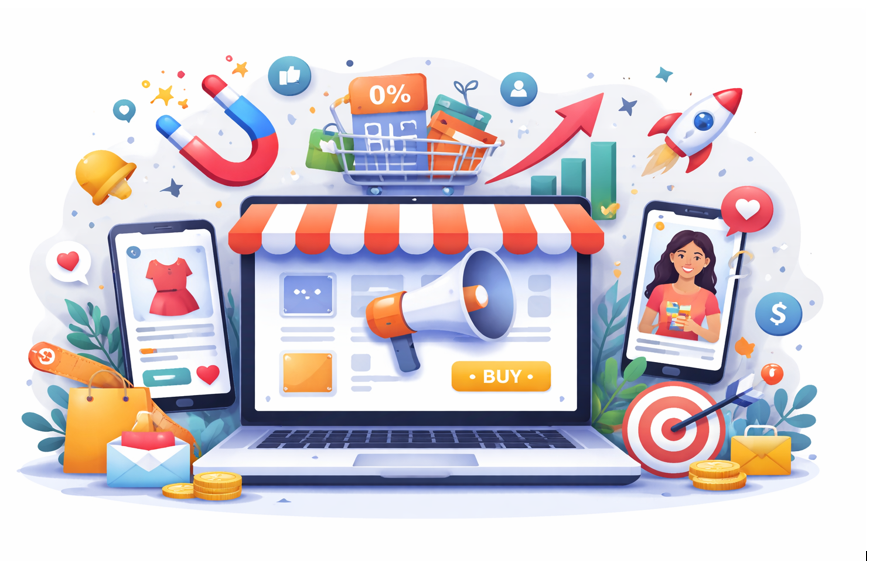
In today’s highly competitive digital marketplace, simply launching an ecommerce store is not enough to guarantee success. With countless online businesses competing for customer attention, store owners must adopt effective promotional strategies to stand out. Strong marketing efforts help increase brand visibility, attract targeted traffic, and build customer trust. By using the right combination of digital channels, content, and technology, ecommerce businesses can strengthen their online presence and create meaningful connections with potential buyers.
Promoting an ecommerce store requires a well-planned approach that integrates search engine optimization, social media marketing, email campaigns, and modern AI-powered tools. Each strategy plays a crucial role in driving qualified visitors and improving conversion rates. This complete guide explores proven methods to boost traffic and increase sales while leveraging data analytics and automation. By applying these practical tips consistently, online sellers can improve customer engagement, maximize revenue, and achieve long-term growth in an increasingly competitive digital environment.
Optimize Your Website for Search Engines
Optimizing your ecommerce website for search engines is one of the most effective ways to attract consistent and high-quality organic traffic. Search engine optimization begins with thorough keyword research to understand what potential customers are searching for online. By strategically placing relevant keywords in product titles, descriptions, meta tags, and URLs, you can improve your website’s visibility on search engine results pages. Additionally, optimizing images with descriptive alt text, improving internal linking, and creating high-quality content such as blogs and buying guides can further enhance your site’s search rankings and user experience.
Beyond keywords and content, technical SEO plays a crucial role in improving your website’s performance and accessibility. A fast-loading, mobile-friendly website not only improves search rankings but also reduces bounce rates and increases user engagement. Implementing secure HTTPS protocols, fixing broken links, and optimizing site architecture help search engines crawl and index your pages more efficiently. Using structured data and schema markup can also enhance your product listings with rich snippets, making them more attractive in search results. Regularly monitoring analytics and conducting SEO audits ensures your website remains optimized for long-term growth and competitiveness.
Leverage Social Media Marketing Effectively
Leveraging social media marketing effectively allows ecommerce businesses to connect directly with their target audience and build strong brand awareness. Platforms such as Instagram, Facebook, Pinterest, and LinkedIn offer powerful tools for showcasing products, sharing promotions, and engaging with potential customers. By creating visually appealing posts, short-form videos, stories, and live sessions, brands can highlight product features and demonstrate real-life usage. Maintaining a consistent posting schedule, using relevant hashtags, and participating in trending topics also help improve reach, visibility, and organic engagement across social media channels.
In addition to organic content, paid social media advertising plays a vital role in driving targeted traffic and increasing conversions. Businesses can use advanced targeting options to reach users based on demographics, interests, and online behavior. Retargeting campaigns help re-engage visitors who have previously interacted with your store, improving the chances of conversion. Analyzing performance metrics such as engagement rates, click-through rates, and return on ad spend enables continuous optimization.
Use AI Image-to-Video Generators for Product Promotion
Using AI image to video generators has become a powerful way for ecommerce businesses to create engaging product promotions without investing in expensive equipment or production teams. These tools allow store owners to transform simple product photos into dynamic videos with smooth transitions, animations, and background music. By uploading high-quality images, businesses can quickly generate professional-looking promotional content that highlights features, benefits, and real-life use cases. Platforms like invideo make this process simple and efficient, enabling brands to create visually appealing marketing videos in seconds while maintaining consistency across digital channels.
AI-powered video creation helps ecommerce stores save time, reduce costs, and scale their marketing efforts more effectively. Instead of relying on complex editing software or hiring videographers, businesses can use invideo to convert images into compelling videos that capture customer attention on social media, websites, and advertisements. These AI-generated videos improve engagement, increase click-through rates, and enhance product storytelling.
Implement Email and SMS Marketing Campaigns
Implementing effective email and SMS marketing campaigns allows ecommerce businesses to maintain direct communication with their customers and drive consistent sales. Email marketing helps nurture relationships by sharing personalized product recommendations, exclusive discounts, and informative newsletters. Building a quality subscriber list through website sign-ups and checkout opt-ins ensures you reach genuinely interested users. Segmenting your audience based on purchase history, browsing behavior, and preferences further improves message relevance. Well-designed emails with clear subject lines, engaging visuals, and strong call-to-action buttons can significantly increase open rates, click-through rates, and overall conversions.
SMS marketing complements email campaigns by delivering time-sensitive messages directly to customers’ mobile devices. Promotional texts about flash sales, limited-time offers, order updates, and abandoned carts encourage quick responses and immediate engagement. Since SMS messages have high open rates, they are ideal for urgent communication and personalized reminders. However, businesses must follow consent regulations and avoid over-messaging to maintain customer trust.
Collaborate with Influencers and Affiliate Marketers
Collaborating with influencers and affiliate marketers is an effective way for ecommerce businesses to expand their reach and build credibility among targeted audiences. Influencers with strong engagement and niche-specific followers can showcase your products through reviews, tutorials, unboxing videos, and social media posts. These authentic endorsements help build trust and encourage potential customers to make purchasing decisions. Partnering with micro-influencers is often cost-effective and delivers higher engagement rates. To achieve the best results, brands should carefully evaluate audience demographics, content quality, and past campaign performance before selecting collaboration partners.
Affiliate marketing further strengthens promotional efforts by allowing partners to earn commissions for generating sales through unique referral links. This performance-based model minimizes risk while maximizing return on investment. Ecommerce businesses can manage affiliate programs using tracking software to monitor clicks, conversions, and payouts. Providing affiliates with creative assets, exclusive discounts, and clear guidelines improves campaign consistency and effectiveness. Regular communication, transparent reporting, and timely incentives help maintain strong partnerships.
Track Performance and Improve with Data Analytics
Tracking performance through data analytics is essential for understanding how your ecommerce store is performing across different marketing channels. By using tools such as Google Analytics, ecommerce dashboards, and customer relationship management systems, businesses can monitor key metrics including website traffic, bounce rates, conversion rates, and average order value. These insights help identify which campaigns are generating the most revenue and which areas need improvement. Analyzing user behavior, navigation patterns, and purchasing journeys also enables store owners to optimize website layouts and product pages for better customer experiences.
Data analytics also supports informed decision-making by enabling continuous testing and optimization of marketing strategies. A/B testing allows businesses to compare different versions of landing pages, email campaigns, and advertisements to determine what performs best. Tracking customer acquisition costs and return on investment ensures marketing budgets are allocated effectively. Predictive analytics and AI-powered reporting tools further enhance forecasting accuracy and trend analysis.
Conclusion
Promoting an ecommerce store successfully requires a balanced combination of strategic planning, creative marketing, and continuous optimization. By implementing effective SEO practices, leveraging social media, utilizing AI-powered video tools, engaging customers through email and SMS, collaborating with influencers, and analyzing performance data, businesses can build a strong online presence and drive consistent growth. Staying adaptable to market trends and customer preferences is equally important. By applying these proven strategies consistently, ecommerce entrepreneurs can enhance visibility, improve customer engagement, and achieve long-term success in today’s competitive digital marketplace.