
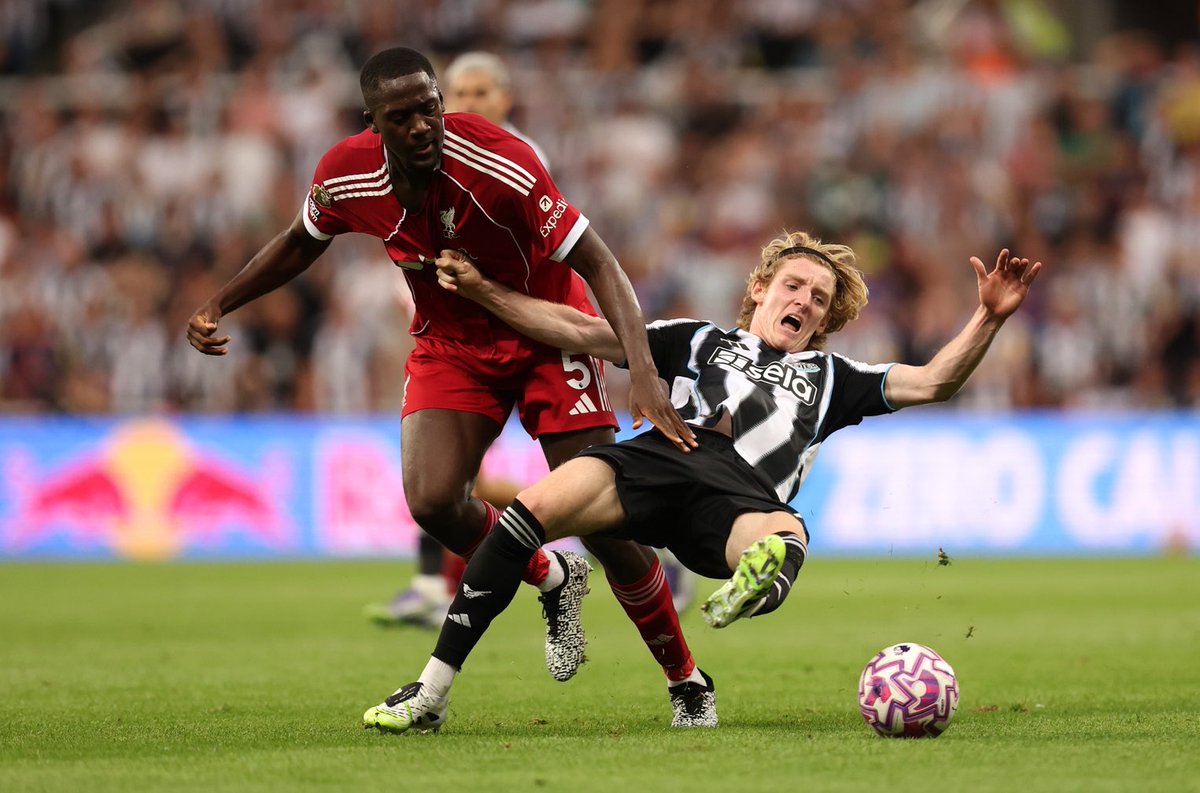
A night at Anfield
Anfield is more than a football ground; it’s a place where memory and noise weave themselves into living history. You walk up the steps, catch the first glimpse of the pitch, hear You’ll Never Walk Alone wash across the stands, and you know this is where belief hardens into something real. This Anfield Edition gathers the moments Liverpool fans won’t forget—those loud, defiant flashes when the team and the crowd moved as one and left a mark that doesn’t fade.
- A night at Anfield
- The roar that changes games
- Barcelona 4–0
- Dortmund 4–3
- The title lift night
- City 4–3
- Arsenal 4–4
- Saint-Étienne 3–1
- The away days that live at home
- The players who shaped the noise
- The Kop’s rituals
- Managers and identity
- The numbers that tell a tale
- What these nights teach
- The next chapter
- Why memory matters
- A conversation between pitch and people
- The human heartbeat
- Holding standards
- Closing reflection
- FAQs
The roar that changes games
There have always been loud stadiums, but Anfield’s voice is different. The Kop doesn’t simply cheer; it shapes the tempo and nudges players into courage. Managers and players have tried to explain it—how the sound can feel like a tailwind behind every press, how opponents unravel under the pressure of an entire stand rising and roaring with every duel. On nights when the stakes are highest, the noise is not an accessory; it’s part of the plan. The best Liverpool teams learned to turn the volume into momentum, each tackle and chant accelerating the next wave of attack.
Barcelona 4–0
On 7 May 2019, Liverpool were 3–0 down from the first leg of a Champions League semifinal against Barcelona. Mohamed Salah and Roberto Firmino were out. Most thought the story had been written the week prior. What followed redefined what a comeback could be. Divock Origi pounced early and the stadium sensed the improbable. Georginio Wijnaldum climbed off the bench in the second half and, in the span of two minutes, powered in two goals that lifted the roof. Then came the corner. Trent Alexander-Arnold glanced away as if walking off, then curled back to whip a low ball to Origi while the defense froze. The finish made it four. The scoreboard said 4–0; the feeling was something closer to disbelief turning into certainty. That night didn’t just carry Liverpool to a sixth European Cup—it crystallized a style and a spirit: aggressive, intelligent, relentless, and alive to every inch of opportunity.
Dortmund 4–3
Three years earlier, Jürgen Klopp stood on the touchline against his former club, Borussia Dortmund, with Liverpool needing something spectacular in the Europa League quarterfinal at Anfield. At 1–3 down on the night and deep into the second half, most teams would fade. Liverpool surged. Divock Origi, again the lifeline, then Philippe Coutinho’s curl, then Mamadou Sakho thumped in a header that rattled the stanchion and the Kop alike. In stoppage time, James Milner chased a lost cause, stood it up, and Dejan Lovren rose into the kind of header that looks fated as it leaves the forehead. The final whistle felt like a release and a promise: that Klopp’s Liverpool would be a team that ran toward the fire.
The title lift night
The Premier League trophy lift in July 2020 came in a season like no other. A global pandemic had emptied stadiums, but Liverpool had surged to a first league title in 30 years with weeks to spare. The 5–3 win over Chelsea was the party Anfield deserved, even in altered circumstances. Goals flew in with the freedom of a summer night. Afterward, a stage on the Kop revealed a moment designed for the ages—captain Jordan Henderson’s shuffle with the trophy, teammates orbiting in joy, a club acknowledging the end of a long wait and the beginning of a standard. The spectacle was as much about the journey as the medal: recruitment done right, coaching that elevated good players to great ones, and a bond between team and supporters that never broke.
City 4–3
In January 2018, Manchester City arrived unbeaten in the league and nearly untouchable. Liverpool turned up the press and the courage, and produced a match that felt like controlled chaos. Alex Oxlade-Chamberlain struck early, Firmino rolled a defender and clipped home, Sadio Mané lashed in off the post, and Salah, from distance, found an empty net with a delicate lob. City rallied, as champions do, but Liverpool held on. That afternoon announced a blueprint: intensity without panic, transitions carved with precision, and a belief that the best can be rattled by a team that refuses to step back.
Arsenal 4–4
Sometimes the unforgettable nights don’t end in victory. The 4–4 draw with Arsenal in April 2009 was a whirl of energy, nerves, and remarkable finishing. Andrey Arshavin scored four for Arsenal in a performance that felt like a storm, but Fernando Torres and Steven Gerrard kept dragging Liverpool back into the fight. The match ended level and breathless. What remained was a reminder of Anfield’s capacity for drama—the kind that leaves you wrung out, half smiling, half stunned, and desperate for more.
Saint-Étienne 3–1
To understand the genetic code of “European nights at Anfield,” go back to March 1977. Saint-Étienne had won the first leg 1–0, then a young Ray Kennedy leveled the tie in the second. The visitors’ away goal threatened to wander home with the tie until Liverpool, relentless, pressed onward. Then David Fairclough, the local lad, sprinted clear and slotted home the winner with the Kop already halfway down the steps. It was the moment a legend about Anfield’s evenings took shape, and it carried Liverpool to their first European Cup. Ask older supporters and you’ll hear this match described not in tactics but in tones—the electricity in the air, the certainty that something was coming.
The away days that live at home
Some of the most cherished memories were written far from Anfield’s turf, yet they belong to its mythology because of how often they are sung back into the stadium. Istanbul 2005 is the obvious one. Three down at halftime to AC Milan, Liverpool returned with three in six minutes, then held on with willpower and defensive heroics before winning on penalties. That night did more than add a trophy; it gave a generation a story to tell. In Rome 1984, Bruce Grobbelaar’s wobbly-kneed routine during the shootout became folklore, part mind game and part theatre, and Liverpool brought home another European Cup. In Madrid 2019, a pragmatic final steered by an early Salah penalty and sealed by Divock Origi’s strike confirmed a rebuild done right. These away chapters are recited inside Anfield like hymns, a chorus that connects eras.
The players who shaped the noise
Certain players are shorthand for moments. Steven Gerrard, with those thunderbolts from distance and the chest-out charge into chaos, felt like destiny in boots. Jamie Carragher turned defending into vocation and refusal, particularly on nights when the line had to hold. Fernando Torres, quick as a gasp, made even elite defenders look mortal—ask Nemanja Vidic. In the current era, Mohamed Salah’s solo flourishes and ice-cold finishes have given the Kop new refrains, while Sadio Mané’s relentlessness and Roberto Firmino’s disguised creativity lent Liverpool’s front line its unpredictable edge. Trent Alexander-Arnold’s vision from right-back—the quick corner to Origi forever pinned to his CV—shifted expectations of the position. And then there are cult heroes: Origi again, the man for nights that tilt into myth; and Alisson Becker, whose header at West Brom in 2021 served as an improbable lifeline and a portrait of a team that refused to accept limits.
The Kop’s rituals
Ritual matters at Anfield because ritual binds people to place. You’ll Never Walk Alone is both anthem and promise. The flags and banners stretch from player tributes to political statements to generational storytelling. There are minute’s applauses and tributes that speak to the club’s empathy and collective memory. During comebacks, you can almost feel the sound change—the rising hum, the whistle-sharp shouts, the mass intake of breath before a set piece. It’s not noise for its own sake; it’s a conversation with the pitch, an insistence that the next tackle is worth everything.
Managers and identity
Bill Shankly built the foundation—community, clarity, an understanding that football is for the people who fill the stands. Bob Paisley and Joe Fagan turned excellence into habit, especially in Europe, with teams that played with intelligence and understatement. Rafa Benítez added tactical steel and nights like Istanbul to the storybook, elevating organization to an art form. Jürgen Klopp married emotional intelligence with pressing football that felt designed for Anfield’s lungs and legs, rekindling the sensation that the stadium itself could tip the balance. Even as eras turn and managers change, the club’s core stays recognizable: bold, collective, unafraid of suffering for a result.
The numbers that tell a tale
Statistics don’t capture the sensation of an Anfield evening, but they draw the outline. Liverpool’s long home unbeaten runs across different eras speak to consistency. European knockout ties won at Anfield over decades suggest a pattern: when the world’s eyes turn to this ground, Liverpool typically find a way. There are clean-sheet streaks that anchored title challenges; there are scoring bursts that turned tight matches into routs in the space of a few minutes. Decibel readings have been cited many times over the years, yet it isn’t the exact number that matters—it’s the timing and the intensity when the match becomes a test of nerve.
What these nights teach
Across the decades, the lesson repeats: resilience is not a slogan at Liverpool; it’s a habit. The best moments are not passive gifts; they are seized—by a smart set piece taken before doubt can speak, by a run to the near post when others have stopped, by a block in the 93rd minute when legs beg for mercy. Another lesson is identity. Through changes in tactics and personnel, the club has remained committed to a certain bravery, an honesty of work that supporters recognize immediately. No team can guarantee trophies every season, but it can guarantee that effort and ambition live in the performance. That’s why the connection holds.
The next chapter
Anfield’s story is unfinished. New leaders emerge; young players step into nights they’ll remember forever; tactical ideas evolve. The stadium itself has changed with new stands and improved facilities, yet the essence remains. The demand for intensity is not just a Klopp-era concept; it’s woven into the place. The next unforgettable moment might come from a teenager in the academy, a set piece drawn on a coach’s whiteboard, or a veteran who finds one last surge in front of the Kop. The expectation isn’t arrogance—it’s faith built on experience.
Why memory matters
Ask a Liverpool supporter about Barcelona 4–0 or Saint-Étienne 3–1 and you won’t just get a scoreline. You’ll get where they were, who they sat with, how it sounded right before the goal. Memory here isn’t nostalgia for nostalgia’s sake; it’s a way of keeping the club’s values fresh. When a crowd sings about Rome or Istanbul, it isn’t living in the past; it’s inviting the present to rise to the standard. This is why the phrase Anfield Edition fits. Each game is another issue, another entry in a collection that fans carry with them. Some entries are epic, some are messy, some are painful, and all of them are part of the same story.
A conversation between pitch and people
The connective tissue through all these moments is the conversation between the team and the stands. Players run farther when the chants lift. The crowd roars louder when a tackle lands clean. On the best nights, that loop becomes a force multiplier. You saw it when Alexander-Arnold’s quick thinking caught Barcelona napping—half a second of silence as the ball left his boot, then a tidal wave. You heard it in the seconds before Lovren’s winner against Dortmund, when the noise reached the kind of pitch that makes decision-making feel inevitable. Not every club has this. Anfield does, because its supporters are participants, not observers.
The human heartbeat
Football at Anfield is also about empathy and shared experience. The club’s history includes triumph and deep sorrow. The way the community holds together through both is part of why victories feel so rich. You sense this in the tributes, in moments of silence that echo as loudly as any chant. It’s there when a young player is applauded off after a mistake, when a returning former player is welcomed, when a long-serving member of staff is acknowledged. The human layer gives the football its meaning.
Holding standards
Great moments don’t arrive by accident. They grow out of standards held every week: pressing until the lungs burn, passing with purpose, committing to duels, preparing for the details that decide tight matches. Liverpool’s recruitment has often targeted mentality as much as talent, bringing in players who want the responsibility of Anfield. It shows in how newcomers adapt to the noise and the expectation. It shows in how the team responds to setbacks with clarity rather than panic. The best memories are the harvest of that work.
Closing reflection
If you’ve felt Anfield on a big night, you know why these moments linger. If you haven’t, you can still feel the outline in the stories. A quick corner. A header that seems to hang in the air for a lifetime. A captain lifting silver against a curtain of red. In this Anfield Edition, the best moments aren’t filed away; they’re carried forward, ready to be sung again when the next whistle blows. And somewhere out there is the next chapter, waiting for a spark and a roar.
FAQs
What makes Anfield’s atmosphere unique?
The combination of history, ritual, and collective belief gives Anfield its edge. The Kop doesn’t just react; it anticipates and drives the game’s rhythm, especially during high-stakes moments.
Which match is considered the greatest Anfield comeback?
The 4–0 win over Barcelona in 2019 stands at the top for many supporters. The deficit, the injuries, and the quality of the opponent turned an unlikely task into an immortal night.
Why do away victories like Istanbul still matter at Anfield?
They’re part of the club’s shared memory. These stories are retold inside Anfield, shaping expectations and inspiring new performances that try to meet that standard.
Who are the players most associated with iconic Anfield moments?
Steven Gerrard, Jamie Carragher, Fernando Torres, Mohamed Salah, Sadio Mané, Roberto Firmino, Trent Alexander-Arnold, Alisson Becker, and Divock Origi are frequently recalled for defining moments.
How does Anfield influence Liverpool’s playing style?
The stadium rewards intensity, courage, and quick thinking. Managers design approaches that channel the crowd’s energy—pressing high, attacking with purpose, and embracing the game’s decisive moments.